Engineering · · 5 min read
Athas is now a native app: rewritten in Rust on GPUI
We replaced the React and Tauri app with one Rust codebase drawn by the GPU. It opens a project 2.4× faster and uses a third of the memory. The first beta is out today.
Try Athas 0.19.0-beta.2
The latest beta of the new native app. Expect rough edges, and tell us what you find.
Already on the beta channel? Athas offers the update by itself. Windows installers are not signed yet, so SmartScreen asks before running them.
Athas started as a Tauri app: a React and TypeScript interface running in the system's web view, with a Rust side for everything that touches your machine. That got us far, but it put a browser between you and your code. Every keystroke, every terminal line and every streamed agent reply crossed a bridge between two runtimes before it reached the screen.
Athas 0.19 removes that bridge. The whole app is now Rust, drawn by the GPU with GPUI, the UI framework Zed is built on. There is no web view and no JavaScript runtime. One process holds your projects, sessions, editor, terminal and agents, and draws them directly.
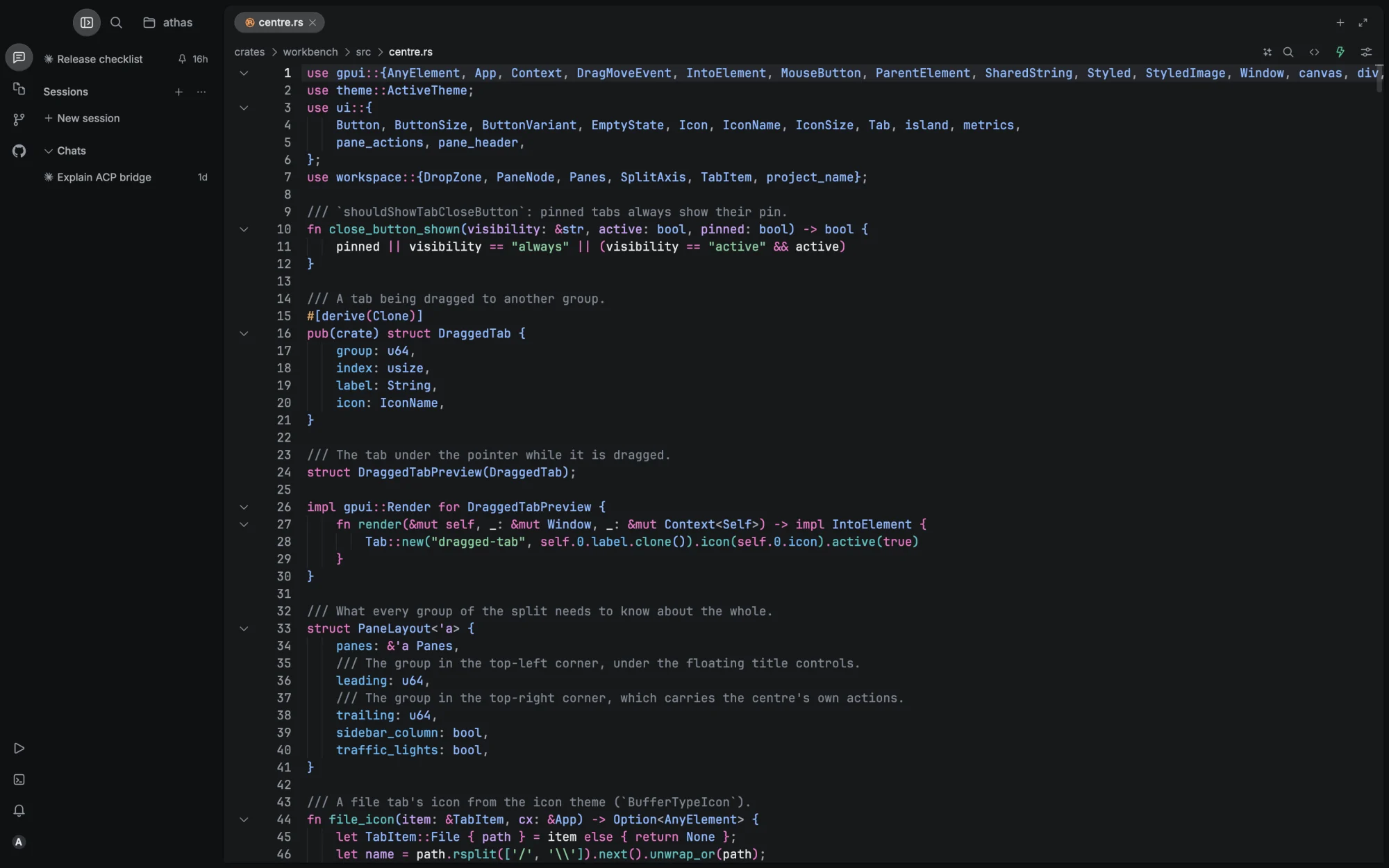
This is the first beta. It is a full port of the app, not a preview with half the features. Below are the numbers, what changed, and what is still rough.
The numbers
We measured the last Tauri build, 0.18.0-beta.2, against the new one, 0.19.0-beta.1. Both are the signed releases you can download from GitHub. They ran on the same Mac, each with its own empty profile, opening the same project and the same file.
Athas on Tauri vs Athas on GPUI
Same Mac, same project, same file. Lower is better everywhere.
Startup
Open a project
Launch to the project's UI on screen, a 1,370-file Next.js repo
2.4× faster
2.61 s1.07 sOpen a 100,000-line file
Launch to the file's text on screen, 3.3 MB of TSX
1.6× faster
1.56 s1 s
Memory
Project open, idle
Every process that draws the UI: the app, plus WebKit's three for Tauri
2.8× less
243 MB88 MB100,000-line file open
Same processes; language servers counted separately below
15% less
290 MB247 MB
While idle
CPU with a project open
Share of one core over 10 s, including the git commands each app runs
6.8× less
3.4%0.5%Processes that draw the UI
Tauri renders in WebKit's content, GPU and network processes
4× less
41
Download
macOS installer (Apple silicon)
The .dmg on the release page
48% more
29.8 MB44.1 MBWindows installer (x64)
The setup .exe; Tauri also relies on the system's WebView2
41% more
21.8 MB30.8 MB
- Opening a project takes 1.07 s instead of 2.6 s. Both windows appear after about a second, but the Tauri window then stays blank while the web view loads and React renders. In GPUI the window appears with the UI already drawn.
- A third of the memory with a project open: 88 MB instead of 243 MB. Most of the Tauri number was WebKit. Its content process alone used about 150 MB, and the GPU and network processes added more. GPUI draws everything from one process.
- Idle means idle. With a project open and nothing happening, the new app used 0.5% of one core, against 3.4% for the Tauri build. Most of the Tauri number came from the git commands it kept running in the background.
The installer did get bigger. The macOS download grew from 29.8 MB to 44.1 MB, and the Windows installer from 21.8 MB to 30.8 MB. The Tauri app was small because it borrowed a browser engine from the system: WebKit on macOS, WebView2 on Windows. The GPUI app ships its own renderer, text system and terminal inside the binary.
One codebase instead of two
The rewrite also made the project smaller and simpler to work on:
| Tauri app | GPUI app | |
|---|---|---|
| Source lines (tests included) | 536,000: 435k TypeScript, 98k Rust, 4k CSS | 341,000, almost all Rust |
| Source files | 3,197 | 899 |
| npm packages | 872 | 0 |
| Languages to know to fix a bug | TypeScript, React, CSS, Rust and the IPC between them | Rust |
A feature used to be split in two: a React component and a store in the interface, plus a Tauri command on the Rust side, with a typed bridge between them that had to stay in sync. Now it is one Rust crate. The crates that did the real work before, such as git, the language server client, the terminal, the database drivers and the agent protocol, came over unchanged. The new app is built on top of them.
What it looks like
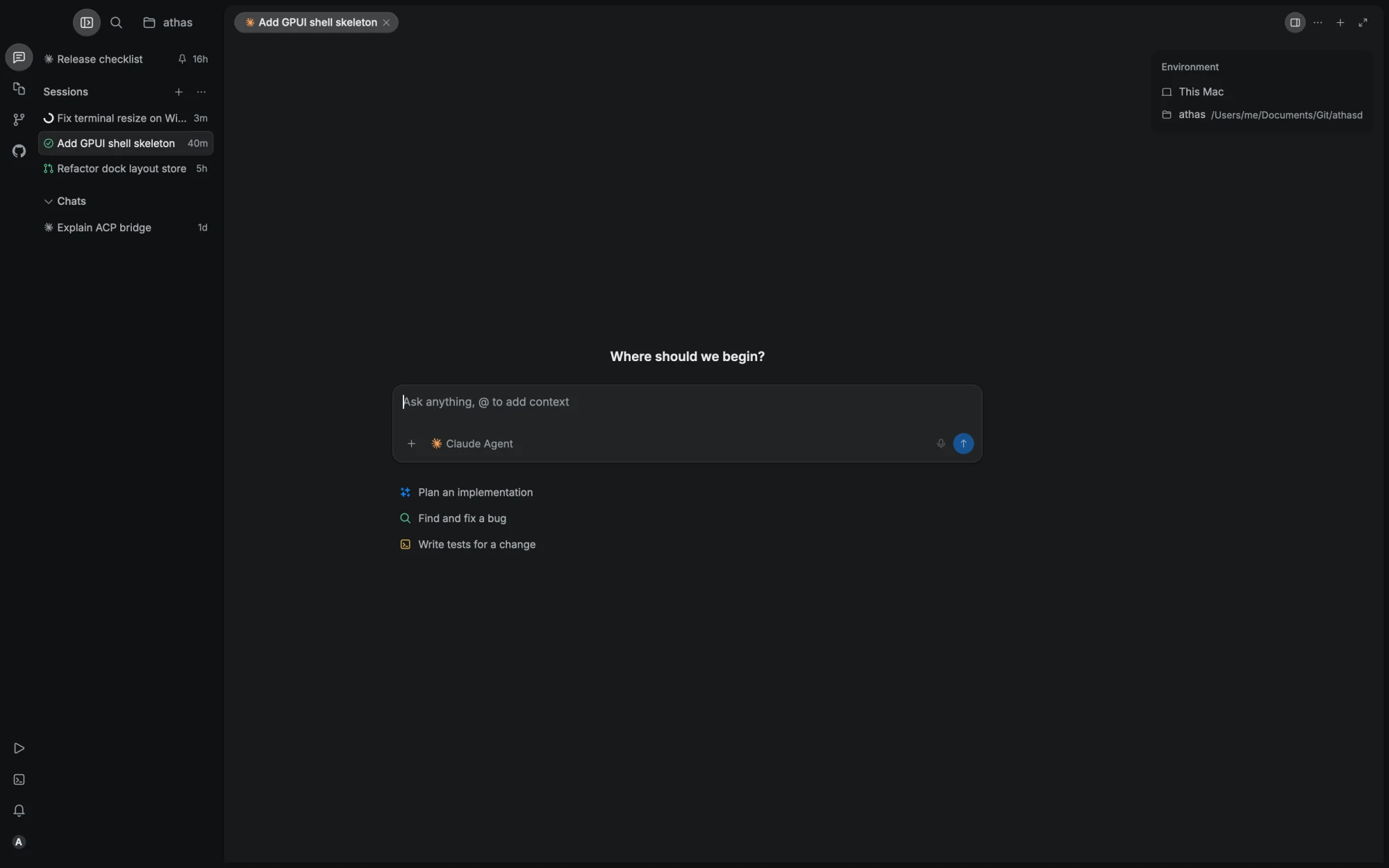
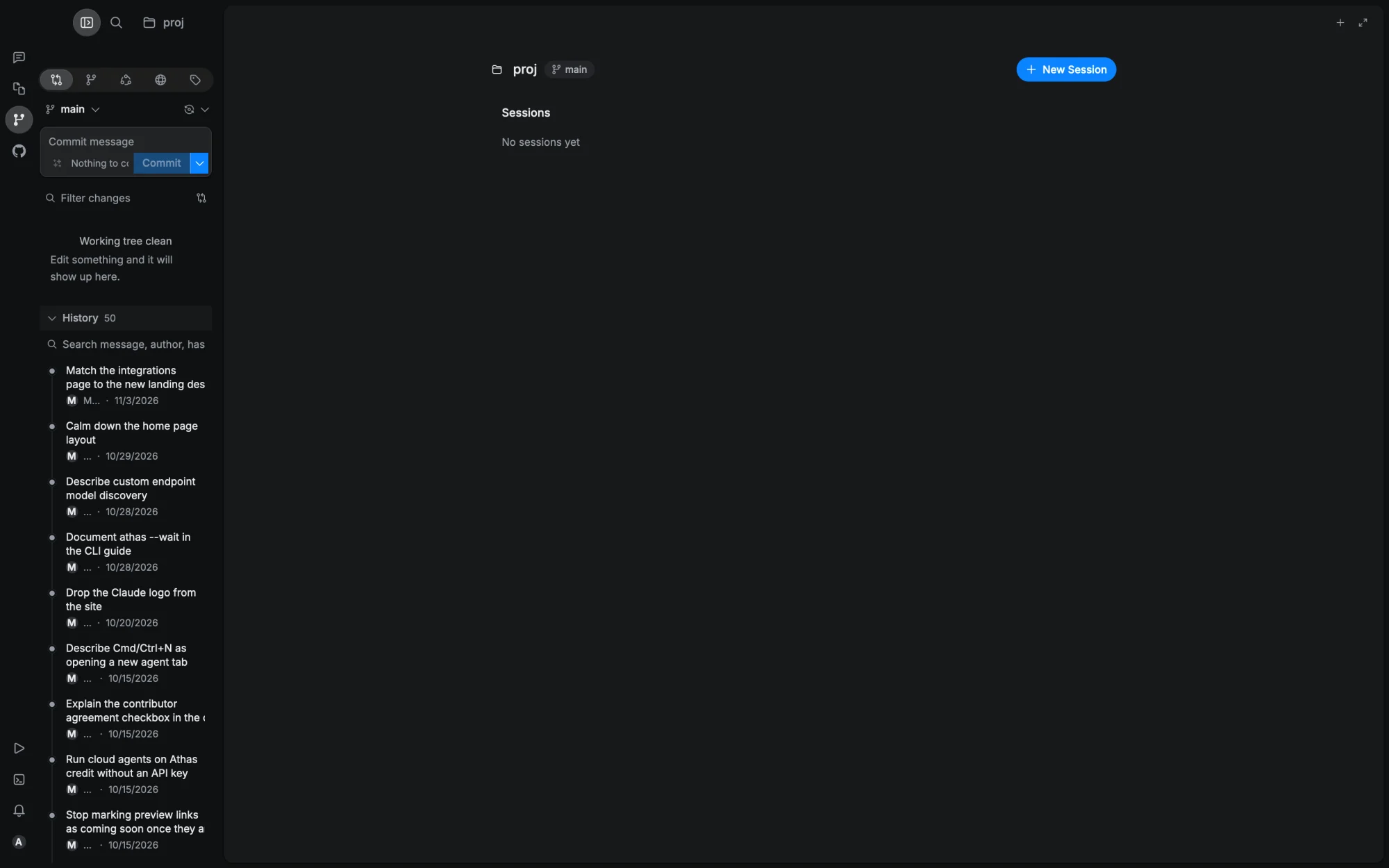
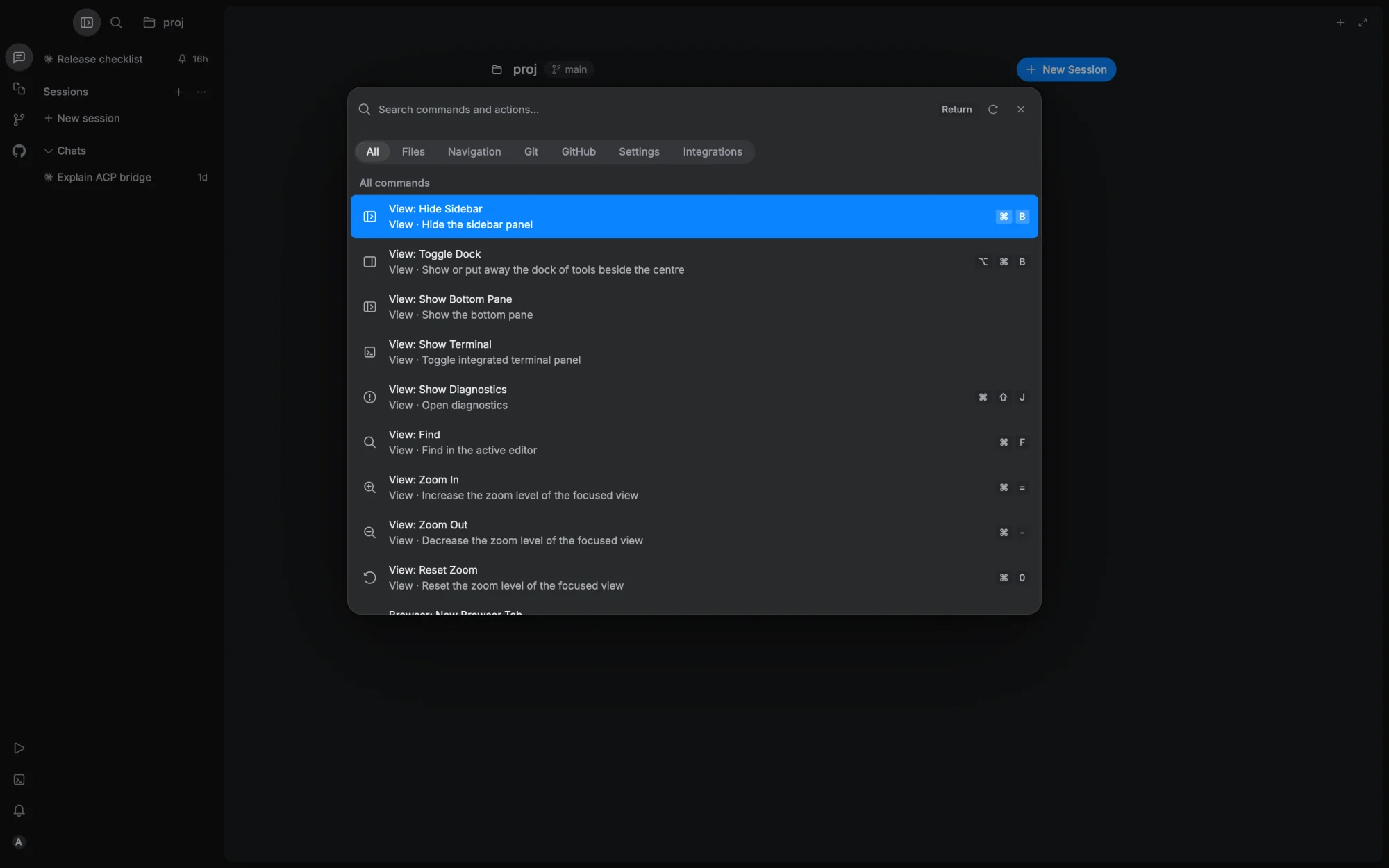
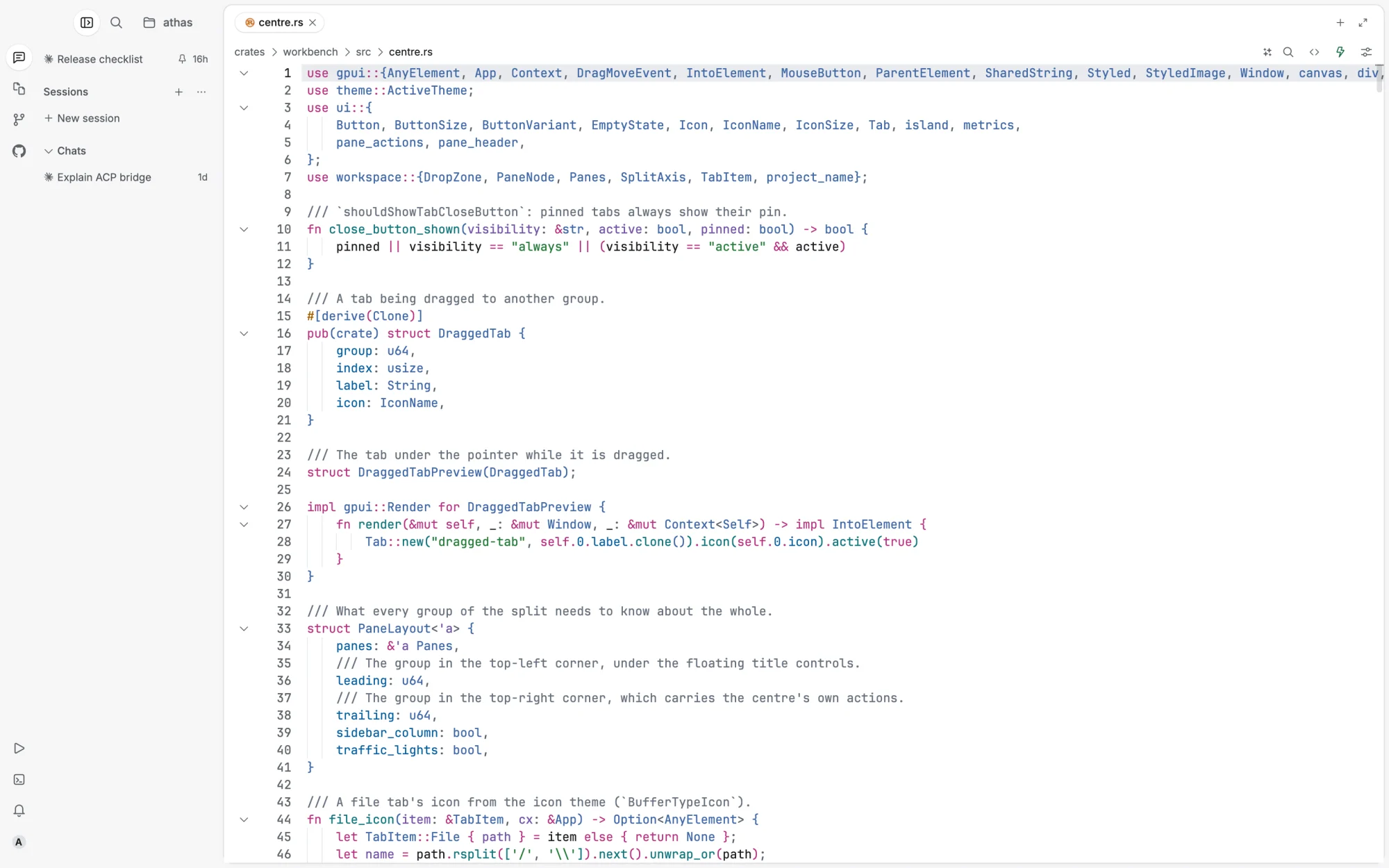
Everything from the Tauri app is here:
- Agent sessions for Claude, Codex, Gemini and other ACP agents, with reviews of the changes they make.
- The editor, with language servers, diagnostics, inline git blame and diffs.
- The terminal, source control, GitHub pull requests and issues, and the database and Docker tools.
- The debugger, the built-in browser and previews.
- Remote projects over SSH and WSL.
- Themes, keybindings and extensions.
Moving from the Tauri app
If you are on the beta channel, Athas offers 0.19 as a normal update. On the first launch, the new app imports your data from the Tauri app: settings, themes, recent projects, keybindings, chat history, extensions and saved API keys. It only reads the old data and never changes it, so if you need to go back to 0.18 everything is still there.
There are a few things to know before you update:
- On Windows, some data stays behind. The Tauri app kept your keybindings, recent folders and run actions in the web view's storage, which the new app cannot read on Windows. You will need to set those up again. Settings, themes, chats and API keys come over as on macOS.
- Windows installers are not signed yet, so SmartScreen asks before running them. Choose "More info", then "Run anyway".
- Open tabs start fresh. Your recent projects come over, but the tabs and terminals you had open do not.
How we measured
- Builds. 0.18.0-beta.2 is the Tauri app and 0.19.0-beta.1 the GPUI app, both the signed releases from GitHub. They ran on an Apple M4 with 16 GB of RAM on macOS 27. Other programs were running on the machine, as on any working day, so treat small differences as noise.
- Startup. A script launched each app directly with an empty profile and polled the screen every few milliseconds. It recorded when the window appeared and when the UI or the file's text was drawn. Each app got one warm-up launch and then seven measured launches per scenario, alternating between the two apps. The charts show the median.
- Memory is the physical footprint reported by macOS, the number Activity Monitor shows, read 6 seconds after the UI settled. It covers every process that draws the UI: the app and, for Tauri, WebKit's content, GPU and network processes.
- Not in the memory numbers: helper programs. Git commands, the Codex helper and language servers are left out and reported separately. With the 100,000-line TSX file open, the GPUI app started the TypeScript language servers, which used about 1.4 GB and kept a core about 12% busy while they indexed the file. The Tauri build's fresh profile did not start them. Language servers cost the same whichever editor starts them, so they are left out of the comparison.
- CPU is the processor time used over 10 seconds of idling with the project open, including the git commands each app ran in that time.
- Download sizes are the files on each GitHub release page.
- Code size counts the lines of
.rs,.ts,.tsx,.jsand.cssfiles in each branch, without lockfiles or dependencies. The GPUI count leaves out our vendored copy ofalacritty_terminal, which is 12,000 lines.
Tell us what breaks
This is a beta, and a full rewrite never comes out perfect. If something is missing, slow or broken, tell us on Discord or open an issue on GitHub. We read everything, and the next betas will follow quickly.